


Since 1977: Your rug specialist
Tradition, expertise & verified quality
Immerse yourself in the world of Bukhara rugs and discover the masterpieces of the Orient. Every pattern is like a painting and unique in itself. The pattern is the most important feature of a Bukhara rug.
… Products

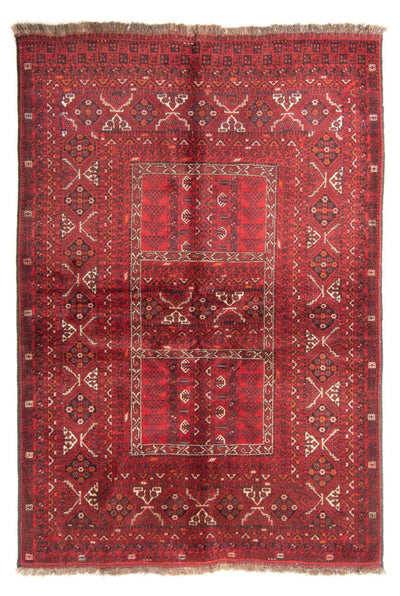
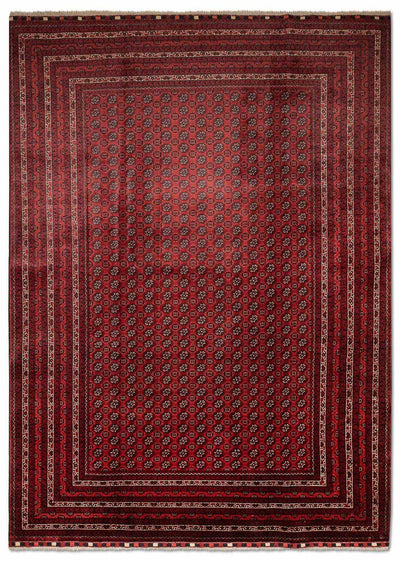

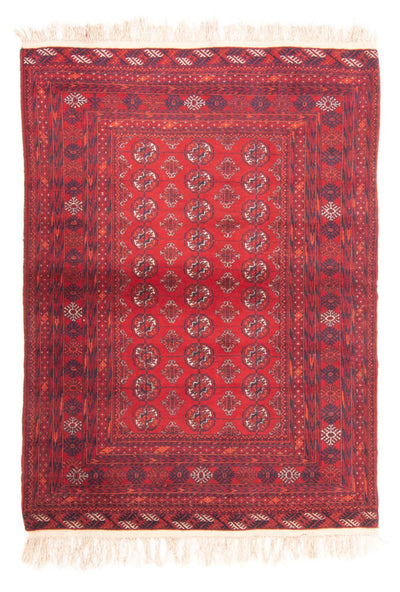


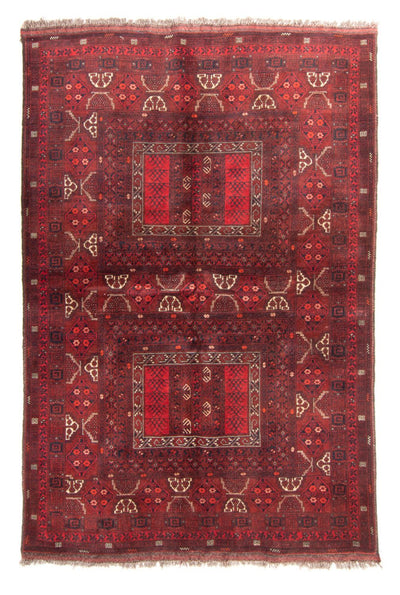


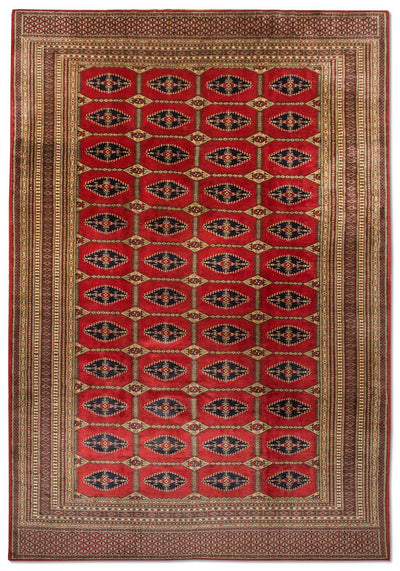

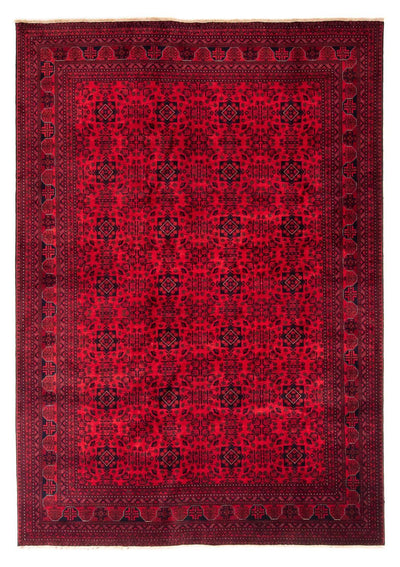
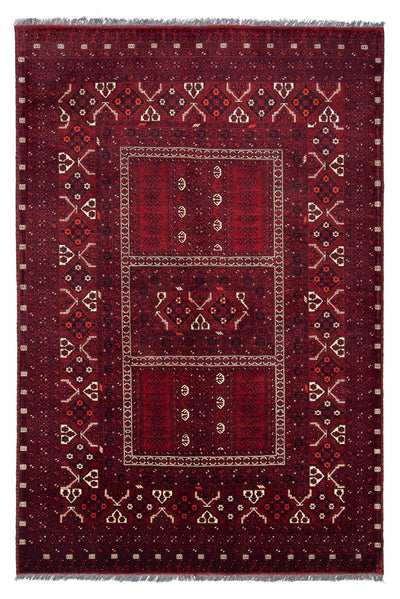

An oriental rug is always something special, and a Bukhara rug stands out even more. In the classic Bukhara a deep red dominates, and the timeless design usually shows fine geometric motifs.
The Bukhara rugs available today are very soft and often a little lighter than antique pieces. Their value depends on their size and above all on their knot density.
Contents
> Where Bukhara rugs come from
> The different patterns of Bukhara rugs
> An oriental rug is a treasure for your home
> Conclusion
The rugs are named after the city of Bukhara, yet hardly any were knotted there: the oasis city on the famous Silk Road, in today’s Uzbekistan, was above all a central trading place where many rugs were offered and sold all over the world.
The rugs were knotted by various Turkmen tribes, such as the Tekke, Salor, Saryk, Yomud and Ersari, whose heartland lies in today’s Turkmenistan. Today, most Bukhara rugs come from northern Afghanistan and Pakistan.
Each tribe developed its own patterns and gave the Bukhara rug its typical appearance. Traditionally, wool is knotted on wool; modern rugs often have a cotton warp. Thanks to the dense knotting, a Bukhara is of very high quality and hard-wearing.
The umbrella term for Bukhara rugs is “Turkmen rug”. Typical is a row pattern of göl motifs, octagonal medallions that structure the entire field. Bukharas knotted in Pakistan are characterised by small medallions, usually framed by fine borders as well. Patterns and colours have hardly changed over the years. The rugs are still knotted by hand and follow traditional models. In particularly precious pieces, individual silk threads are knotted in to give a special sheen. The Bukhara region is also home to the suzani, embroidered textiles that are not knotted rugs.
In everyday language, Bukhara, Persian and oriental rugs are often lumped together. Yet their appearance and region of origin clearly set the individual rugs apart.
But they all have one thing in common: their patterns tell of their region, and all genuine oriental rugs are knotted by hand.
Nowhere in the world is there such a dense craft tradition, reaching back to antiquity, as rug knotting in the Orient.
Even if you don’t have room for a large rug, you can treat yourself to such a treasure in a smaller format, for example as a runner or as a small rug for your cosy corner.
A rug from the Orient or Central Asia enhances your home in a very special way.
Enjoy the warm, soft feel of the fine wool and delight in the fantastic colours and designs every day.
To stop dirt from settling, vacuum your rug in the direction of the pile at least twice a week. To help the fibres stand up again, then vacuum once against the pile. But avoid cleaning your rug with a beater-brush vacuum, as this can break the fibres over time.
Tradition, expertise & verified quality
Shop without risk
Simple & convenient home delivery
The right rug for every style

$38.00