

Since 1977: Your rug specialist
Tradition, expertise & verified quality
Isfahan rugs from Iran are among the finest Persian rugs in the world. With up to 800,000 knots per square metre and exquisite patterns in silk or kork wool, they embody craftsmanship of the highest order.
… Products
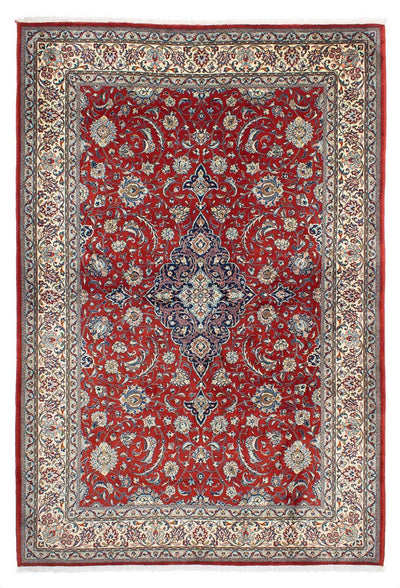

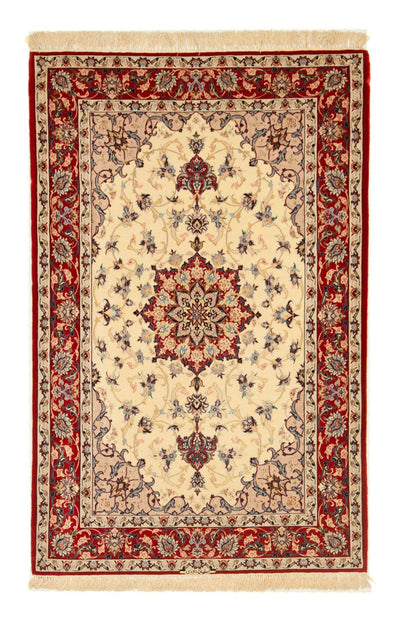
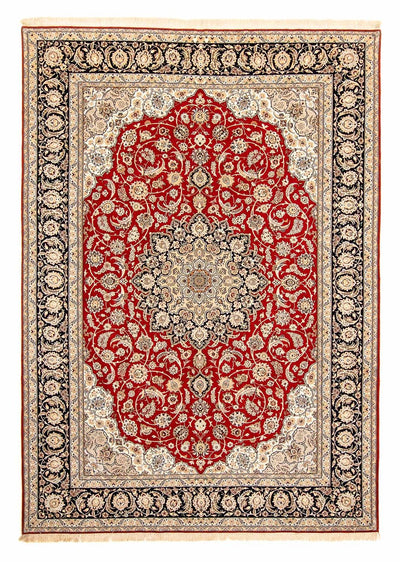
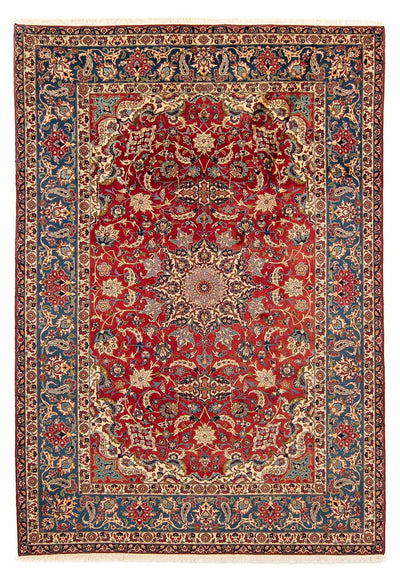
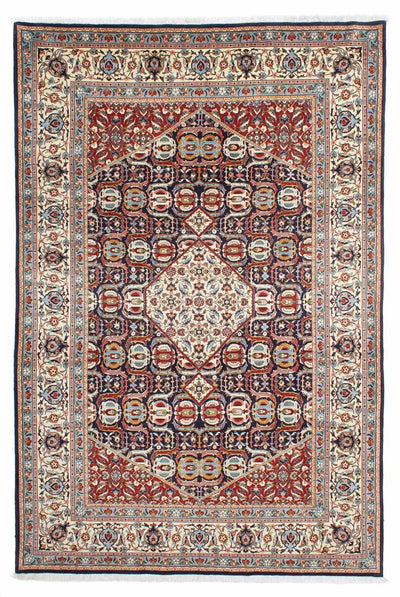
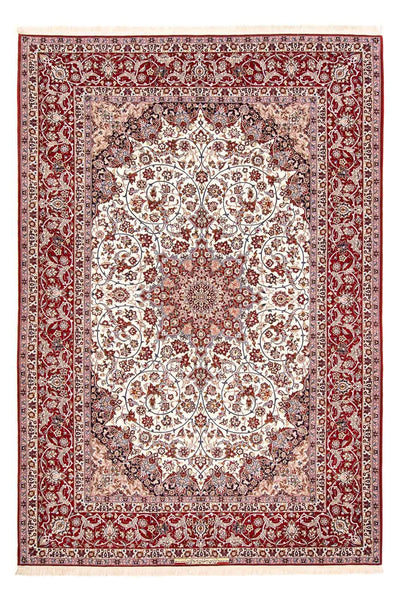
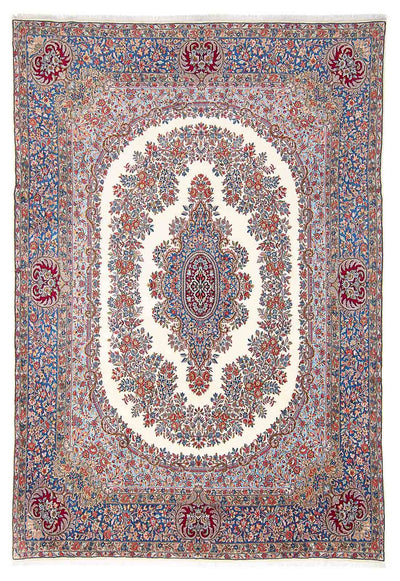


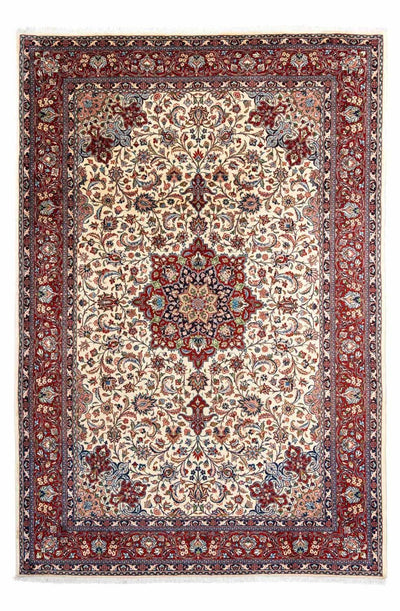

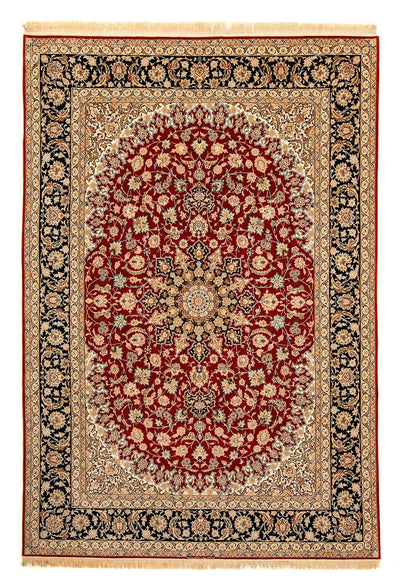
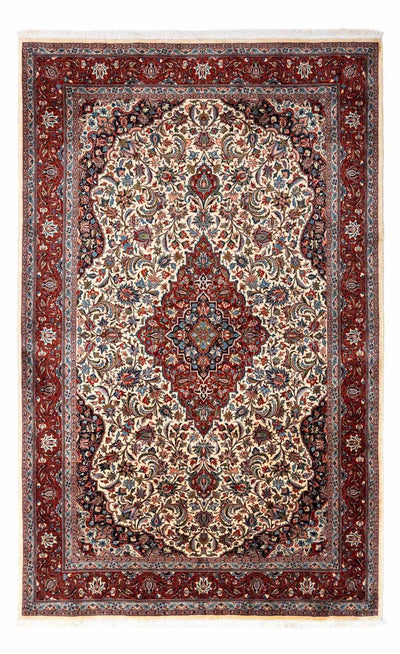


The Isfahan rug is one of the finest Persian rugs in the world and comes from the city of the same name in central Iran. With an exceptional knot density of up to 800,000 knots per square metre and exquisite patterns in silk or the finest kork wool, every piece embodies the highest craftsmanship. In our Hamburg showroom (since 2007) we present these masterpieces of Persian tradition.
Isfahan, the historic capital of Persia, was already regarded as a cultural centre in the 16th century. The city is famous for its magnificent buildings, such as the Imam Mosque with its turquoise domes and intricate arabesques. This architectural beauty is reflected in the rugs that have been made here for centuries. The knotters transfer the elegance of the mosques and palaces into their work. Every Isfahan rug bears witness to this rich past.
Under the Safavid dynasty, the Isfahan region in Iran developed an incomparable art of rug making. Craftsmen created pieces for royal palaces at that time that are still regarded as a benchmark today. The tradition of this craft has been preserved over generations. Modern Isfahan knotters work according to the same principles as their ancestors. The result is oriental rugs of timeless elegance.
The special quality comes from years of training for the knotters and a strict selection of materials. A single Isfahan rug can take several years to make. This dedication makes every piece unique. The knot density reaches values that are considered absolutely exceptional in the world of rugs. No wonder these Persian rugs are prized internationally as luxury goods.
Genuine Isfahan rugs are traditionally knotted on a cotton foundation. The warp and weft consist of the finest cotton yarn, which guarantees stability. For the pile, the knotters use either pure silk or high-quality kork wool. This choice of material has a considerable influence on the character and price of the finished rug.
Silk rugs from Isfahan are in the absolute top class. The use of natural silk allows particularly fine details and a silky sheen. When light falls on them, the colours shimmer in different nuances. Such pieces are less suitable for heavily used areas and better suited as artistic wall hangings. Their value rises continuously over the years.
Kork wool is a particularly high-quality new wool that comes from sheep in mountain regions. This wool is characterised by fineness, sheen and durability. Isfahan rugs made of kork wool combine hard-wearing qualities with elegance. The knotting technique follows the Persian knot, also known as the Senneh knot. This technique allows the extreme knot density of 600,000 to 800,000 knots per square metre.
The knotter's hand works with the utmost precision. Each individual knot is looped around the warp threads and pulled tight. After each row, the knots are beaten down with a comb to compact them. This process is repeated thousands of times. The result is a surface of velvety fineness and exceptional detail.
The patterns of an Isfahan rug follow centuries-old models from Persian miniature painting. Central medallions often dominate the field, surrounded by floral tendrils and arabesques. This symmetry embodies the Islamic idea of harmony and perfection. Every detail is carefully thought out and executed.
Floral motifs such as blossoms, leaves and vines run through the designs. They symbolise paradise and the beauty of nature. Animal depictions such as birds or gazelles are also common. They link the rugs with Persian poetry and literature. The colours range from strong red and blue to soft beige and cream.
Natural dyes from plants, roots and minerals produce the characteristic colour palette. Indigo provides deep blue, madder produces warm reds and pomegranate peel creates shades of yellow. These natural dyes age gracefully and develop a noble patina. A beige-ground Isfahan with floral designs in blue and red is considered a classic. Such colours harmonise with almost any interior style.
The border of an Isfahan rug is just as artfully designed as the central field. Several narrow guard stripes often frame a wider main border. This usually also shows floral or geometric designs. The harmony between field and border is a mark of quality. Masterpieces of this kind lack no detail.
Isfahan rugs are knotted in various formats. Small pieces start at around 80 x 120 cm and work well as accents. Medium formats from 150 x 200 cm to 200 x 300 cm are particularly popular. Large pieces can reach 300 x 400 cm and more. The size has a considerable influence on both the production time and the selling price.
Rectangular formats dominate the range because they are the most versatile. Square rugs are rarer and often conceived as special collector's pieces. Runner formats also exist but remain the exception. The choice of size should be guided by the dimensions of the room and the furniture. A rug that is too small can look lost in a large room.
When choosing, bear in mind that Isfahan rugs are relatively heavy because of their high knot density. A piece measuring 200 x 300 cm can easily weigh 25 to 30 kilograms. This density contributes to dimensional stability and prevents slipping. For the delivery of larger formats, you should plan suitable means of transport. In our showroom we are happy to advise you on all practical aspects.
An Isfahan rug shows its full effect in the living room. There it becomes the central eye-catcher and defines the seating area. Its noble aura is particularly suited to classically furnished rooms. But in modern interiors, too, such an oriental rug creates an appealing contrast. The combination of contemporary furniture and a traditional rug looks surprisingly harmonious.
In the dining room, the rug should be generously sized. It must lie completely under the table even when the chairs are pulled out. The high quality of an Isfahan justifies this investment. Its dense pile is more hard-wearing than is often assumed. Regular care preserves its beauty for decades. Including VAT, prices start at around 3,000 euros but can rise considerably depending on size and material.
For bedrooms, silk rugs from Isfahan are particularly suitable. Their soft sheen and fine texture create a luxurious atmosphere. Here the rug is exposed to less mechanical stress, which protects the precious material. Such a piece becomes a daily artistic pleasure. In the study, an Isfahan rug underlines seriousness and good taste.
Heavily used areas such as hallways or entrance areas are less suitable. The elaborate knotting and the valuable materials deserve a protected location. Direct sunlight should be avoided, as it can fade the colours. A suitable room preserves the investment and maximises the enjoyment of this special piece. Your home gains style and value with an Isfahan.
Proper care begins with regular vacuuming in the direction of the pile. Use a medium suction setting without rotating brushes, as these can damage the fine knots. Once or twice a week is sufficient with normal use. Do not vacuum the fringes; instead, smooth them out carefully by hand.
Treat stains immediately with a clean, dry cloth. Dab the dirt off without rubbing, as rubbing would push the stain deeper into the fabric. For stubborn stains, professional help is advisable. Household cleaners can attack the natural colours. A rule of thumb: if in doubt, consult a specialist.
The rug should be professionally cleaned every three to five years. Specialist companies have experience with high-quality oriental rugs. They use gentle processes and pH-neutral cleaning agents. This investment preserves the value of your Isfahan in the long term. After cleaning, the colours shine with new freshness. Its lifespan is extended by decades.
Turn the rug by 180 degrees once a year so that wear is distributed evenly. Avoid heavy furniture that leaves pressure marks; felt pads under furniture legs provide additional protection. For longer storage, roll the rug up with the pile facing inwards. Never fold it, as creases can cause permanent damage. Proper care turns your Isfahan into an heirloom.
You can check authenticity by several features. Turn the rug over and look at the back. With genuine hand-knotted rugs, the pattern is clearly recognisable. Machine-made imitations show a blurred image. The knots should be visible with a magnifying glass. Each knot is individually tied by hand.
The origin can often be read from the label or from expert certificates. Reputable dealers provide these documents. They confirm the region, age and material of the rug. At Morgenland you receive detailed documentation with every Isfahan. Our expertise is based on experience since 1977. We import exclusively from trustworthy partners in the Isfahan region.
The price reflects knot density, material and size. A high-quality Isfahan made of kork wool costs less than a comparable silk rug. You should view discounts critically, as unrealistically low prices often point to fakes. Invest in quality that lasts for generations. Our sales team will advise you transparently on all aspects of price, including VAT.
Pay attention to natural dyes and traditional knotting technique. Chemical dyes fade faster and look artificial. The smell test helps: naturally dyed wool smells neutral to slightly of lanolin, while chemically treated rugs often smell pungent. Take your time with the inspection. An Isfahan is a long-term investment that deserves careful selection. In our online shop you will find detailed product descriptions with all the relevant information.
Since 1977 (in Hamburg since 2007) we have been your address for authentic Persian rugs. Our showroom presents a carefully curated selection of Isfahan rugs. We have personally selected and quality-checked every piece. This tradition commits us to the highest standards. Trust is the basis of our long-standing customer relationships.
Our staff have in-depth expertise on origin, knotting technique and care. We take time for detailed consultations. You can compare different pieces at your leisure. This service sets us apart from anonymous online retailers. Personal contact enables tailor-made recommendations for your individual needs.
The combination of tradition and modern service makes us the first choice. We offer safe delivery right to your home. Payment options can be arranged flexibly. After your purchase, we are available for care tips and service. Visit us in Hamburg and experience the fascination of genuine Isfahan rugs. You can feel the quality when it is right in front of you.
Genuine Isfahan rugs show a clear, detailed pattern on the back. The knot density is between 600,000 and 800,000 knots per square metre. The materials are traditionally kork wool or silk on a cotton foundation. A certificate and transparent information on origin from the dealer are further indications of authenticity.
Prices start at around 3,000 euros for smaller formats in kork wool. Large silk rugs can cost 20,000 euros and more. Size, material, age and knot density determine the price. All prices include VAT. Do not be deceived by extremely cheap offers; these are usually not originals.
Vacuum regularly in the direction of the pile without rotating brushes. Dab stains immediately; do not rub. Professional cleaning by specialists is recommended every three to five years. Avoid direct sunlight and turn the rug by 180 degrees every year for even wear.
High-quality natural fibres such as wool and silk are generally suitable for allergy sufferers. The dense knotting binds dust on the surface instead of stirring it up. Regular vacuuming removes allergens effectively. If you have a house dust allergy, you should nevertheless seek medical advice. Natural materials are, however, generally better tolerated than synthetic fibres.
With proper care, an Isfahan lasts for several generations. Antique pieces from the 19th century are still in good condition today. The high knot density and first-class materials guarantee durability. Professional maintenance extends the lifespan further. An Isfahan is therefore not just decoration but a store of value.
Yes, in our online shop you will find selected Isfahan rugs with detailed product descriptions. High-resolution photos show every detail. The basket guides you securely through the ordering process. We do, however, recommend a visit to our Hamburg showroom, where you can experience the quality first-hand and receive personal advice. Many customers use both: find out online, decide in person.
High-quality Isfahan rugs are considered to hold or even increase their value. Particularly rare pieces and silk rugs can rise in value. Demand for authentic craftsmanship is growing steadily. It is important to buy from a reputable specialist dealer with expertise. Keep all documents relating to the origin. This is how you secure the sentimental and material value for generations to come.
Tradition, expertise & verified quality
Shop without risk
Simple & convenient home delivery
The right rug for every style

$38.00