


Since 1977: Your rug specialist
Tradition, expertise & verified quality
Buy Hamedan oriental rugs online Hamadan rugs - Persian rugs all about the rug | Oriental rugs.
… Products


Rugs from the western region of Iran around the historic city of Hamadan are among the most versatile and robust oriental rugs available today. These rugs, which look back on a craft that has grown over centuries, combine timeless elegance with remarkable resilience, which is why they are valued in both modern and classic living spaces. Their ability to create a cosy yet stylish atmosphere makes them a popular choice for many different uses.
Hamadan lies around 300 km west of Tehran and also serves as an umbrella term for a wealth of rugs that are hand-knotted in the surrounding villages and towns. This region, shaped by ethnic diversity and its wealth of knotting traditions, produces rugs that can differ greatly in design, value and density. From simple pieces for everyday use to fine, artful examples that are often known by specific place names such as Nahavand, Malayer, Toiserkan and Enjilas, Hamadan covers a broad spectrum in the field of knotted Persian rugs.
The shahr-baft is also found here, a term that refers to exclusive rugs knotted in urban or town-like settings. They are characterised by delicate knotting and more complex motifs, which makes them – not least older rugs of this kind – sought-after pieces, especially among collectors and connoisseurs.
Both hand-spun and industrially produced fibres are used in production, depending on the intended level of the end product. While luxurious Persian rugs are often knotted on cotton warps and made of fine new wool, which gives the oriental rug a particular suppleness, cheaper versions often use machine-spun yarns and simpler dyeing techniques.
These rugs are made in the numerous villages around the Hamadan region and then sold in the city, which is regarded as one of the most important centres of the Iranian rug trade. Handcrafted production guarantees the high quality and authenticity of every single rug. The use of hard-wearing wool, combined with a high knot density, makes these rugs particularly resistant to wear, which makes them a long-lasting investment for any household.
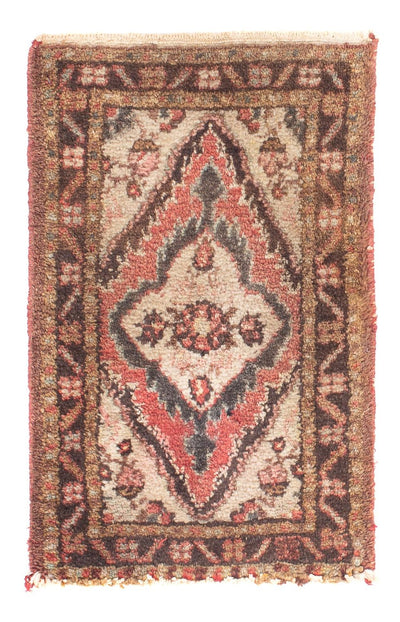
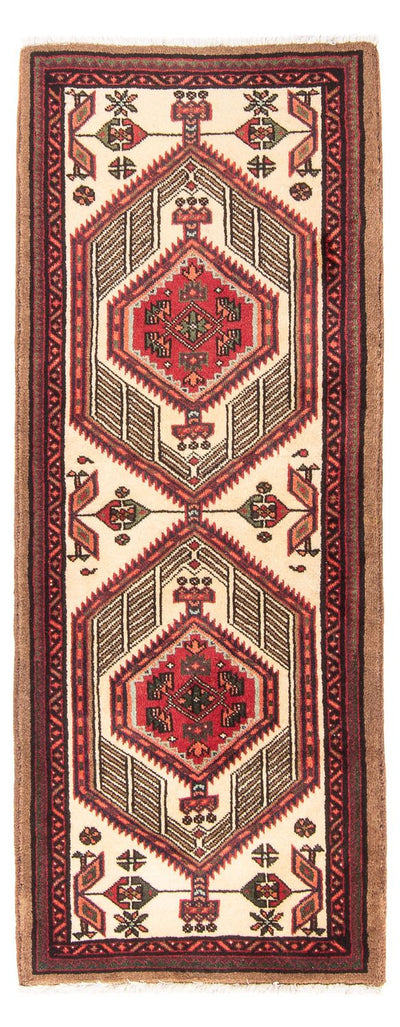
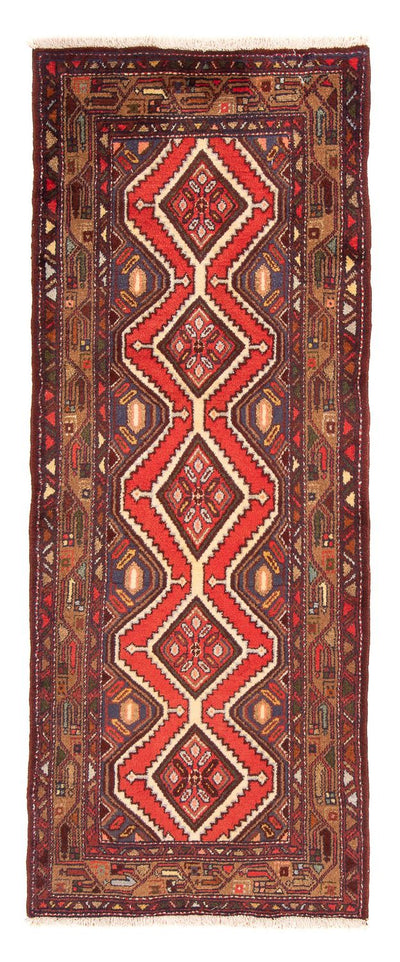
Oriental rugs are known for their varied and often artful designs, shaped by the different knotting traditions of the region. Medallions, geometric structures such as lozenges and repeated forms (repeat patterns) typically dominate, giving the rugs a harmonious and balanced look. The Herati pattern deserves special mention: a classic motif that combines floral elements and lozenges and is frequently found. Despite the predominance of geometric designs, floral drawings such as stylised flowers and tendrils are not uncommon either and give the rugs an additional decorative touch.
| Pattern | Meaning |
|---|---|
| Boteh | Eternity and the cycle of life |
| Herati | Happiness and prosperity |
| Mihrab | Prayer and spirituality |
| Gul | Flower, stands for beauty and nature |
| Shah Abbasi | Splendour and nobility, named after Shah Abbas |
The colour palette of these Persian rugs is as varied as their styles and reflects the natural resources of the region. Traditionally, strong blues obtained from the indigo plant dominate, along with warm reds derived from madder root.
These bright base colours, which offer a beautiful contrast, are often complemented by ivory and beige accents from walnut shells, which give the patterns depth and contrast while creating a harmonious balance. They are biodegradable and durable. The use of natural dyes not only contributes to the aesthetic quality of the rugs but also ensures that the shades age beautifully over time and develop an attractive patina.
They are often a sign of ethical and sustainable craft products. These practices support traditional craft communities and help preserve age-old techniques that are increasingly threatened by industrial production methods. These techniques have been used for centuries and are a sign of the great skill and knowledge passed down from generation to generation. The manual dyeing of the yarns also contributes to the uniqueness of each rug, as the shades can vary slightly, underlining the handmade character.
The hand-knotted rugs, known for their robustness and durability, are ideal for heavily used areas of the home such as hallways and entrance areas, where they not only serve as a decorative element but also withstand daily wear. They also give living and dining rooms a warm and inviting atmosphere, while in the bedroom their soft texture and soothing nuances create a cosy and relaxed environment. Their versatile design allows them to be used in almost any room of the house, spreading a touch of oriental spirit.
Hamadan rugs are available in a wide range of sizes and shapes to meet different requirements and preferences. From smaller runners, which work perfectly in narrow corridors or entrance areas, to large rugs that can act as the central eye-catcher in a living room, they offer numerous design options. Most rugs are rectangular, but there are also square and round versions that blend harmoniously into different room concepts.
Quite classically, you will also find the rugs in our shop in the so-called zaronim sizes. This term is common in the Persian rug tradition and corresponds to approximately 100 x 150 cm. These dimensions were formerly used for seating or for ceremonial and cultural purposes. Zaronim rugs are particularly practical for special placements, such as in entrance areas or as accent pieces in living rooms and bedrooms.
Caring for Hamadan rugs is relatively straightforward, but a few basic rules should be observed to preserve their beauty and durability. Regular vacuuming, ideally without a brush attachment, removes dust and dirt particles that can settle in the pile. Stains call for quick action: they should be carefully dabbed with a damp cloth and not rubbed, to avoid damaging the fibres. Professional cleaning every few years is recommended to remove ingrained dirt and refresh the colours without affecting the natural patina of the rugs.
Morgenland offers you an exclusive selection of authentic rugs that are only found in the province of Hamadan, known for its diverse rug culture shaped by nomads and urban knotters alike. Besides the well-known pieces, you will also find rugs from places such as Nahavand, Hosseinabad or Nain here.
A classic Hamadan is characterised by its coarse knot count, a robust cotton warp and a special weft thread that stabilises the structure. Every piece Morgenland sells bears witness to traditional craftsmanship. Thanks to free shipping from a minimum order value and a large selection, you can browse conveniently online and view all designs or find out more. Morgenland – your first address for Hamadan rugs.
Rugs from Hamadan are an excellent choice for anyone who values classic beauty. Their variety of patterns and shades and their careful craftsmanship make them an outstanding example of oriental rug art that has its place in both classic and modern interiors. Thanks to their robust nature and aesthetic versatility, they are not only a practical floor covering but also a decorative highlight that enhances any room and creates a warm, inviting atmosphere. Enrich your home with a piece of oriental soul and artistry that can last for generations.
The city of Hamadan lies around 300 km west of Tehran. The many villages in the province generally produce high-quality everyday rugs. They have a good reputation, are hand-knotted and decorated with designs featuring geometric and floral motifs. The use of high-quality new wool and traditional craftsmanship, common in Persian rugs, makes them durable and hard-wearing.
Yes, thanks to great expertise in the use of robust materials and dense knotting, they are ideal for heavily used areas such as hallways, entrance areas and living rooms. They withstand daily wear and keep their shape and colour for many years, which makes them a practical and long-lasting choice.
Typical motifs are geometric shapes, medallions and the Herati pattern, which consists of lozenges and floral elements. In terms of colour, strong reds and blues – unmistakably Persian – predominate, produced with natural dyes such as indigo and plant dyes (e.g. dyer's madder). Beige and ivory tones, often obtained from walnut shells, round off the colour palette and create harmonious contrasts.
Care is relatively straightforward. Regular vacuuming without a brush attachment helps to remove dust and dirt. Stains should be dabbed off immediately with a damp cloth without rubbing, so as not to damage the fibres. Professional cleaning every few years can help to refresh the colours and remove deep-seated dirt. Well cared for, they can be passed on to future generations as heirlooms.
Tradition, expertise & verified quality
Shop without risk
Simple & convenient home delivery
The right rug for every style

$38.00