


Since 1977: Your rug specialist
Tradition, expertise & verified quality
Tabriz carpets originate from one of the oldest and most productive knotting regions in Iran and are known for their enormous variety of patterns. From the famous Mahi design (fish pattern) to complex figurative representations – artistic freedom in Tabriz is limitless. At Morgenland Carpets, we carry Tabriz carpets that impress with their high knot density (measured in raj) and the use of first-class wool and often silk. These carpets are extremely robust yet delicate in their design, making them ideal for heavily used living areas. A Tabriz carpet is the perfect choice for connoisseurs who want to combine craftsmanship perfection with a vibrant, historic design that will retain its beauty for generations to come.
… Products
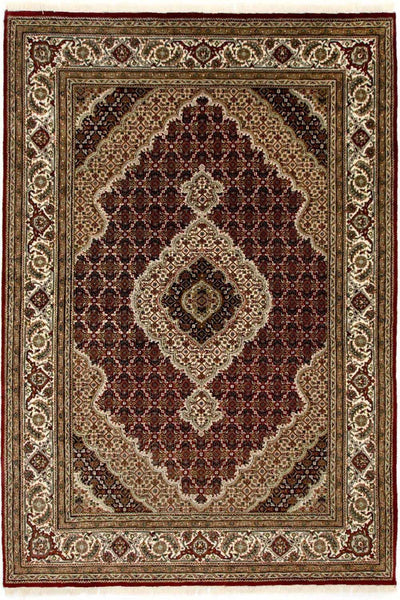
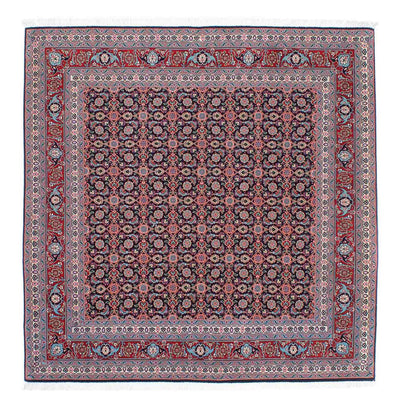

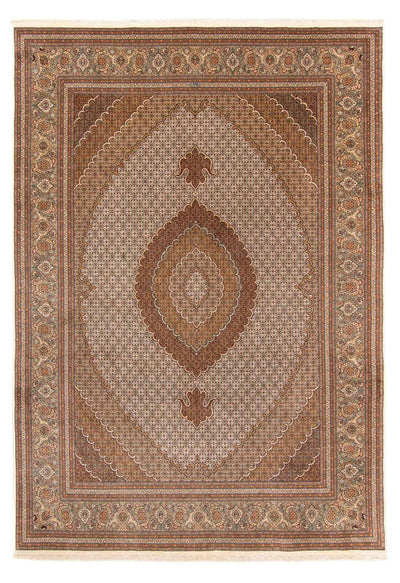


Tabriz rugs are hand-knotted Persian rugs. For centuries, Tabriz rugs have fascinated designers and collectors alike with their intricate medallion motifs and shimmering abrash. These Persian beauties, which have been hand-knotted in the ancient Azerbaijani city of Tabriz for more than seven centuries, are a perfect blend of artistry and practicality.
With their dense pile and supple construction, they are perfect for the floors of great halls and palaces, while their magnificent beauty has made them coveted diplomatic gifts.
Today, the patterns and colours of antique rugs offer an insight into the rich knotting tradition of north-western Iran, with striking shades from deep midnight blue to glowing carmine red, produced with natural dyes such as indigo and madder root. For those who appreciate textiles as an art form, Tabriz rugs are the ideal way to bring Persian culture to life, one knot at a time.
Tabriz rugs are made from the finest silk and wool obtained from high-quality sheep. The use of natural materials makes them a more environmentally friendly alternative to synthetic rugs. The quality of the materials used is reflected in the durability and luxurious appearance of Tabriz rugs.
They stand out for their diverse patterns and designs, ranging from traditional Persian motifs to modern patterns.
Popular patterns include the characteristic “Herati pattern”, made up of small leaf-shaped motifs, and the “boteh pattern”, distinguished by its cone-shaped motifs. The colours of Tabriz rugs are usually bright and range from red and green to blue and yellow.
The patterns and designs used in Tabriz rugs often have symbolic or cultural meanings. The “Herati pattern”, for example, is often regarded as a symbol of love and happiness.
The “boteh pattern” is regarded as a symbol of growth and fertility. The colours of Tabriz rugs can also have symbolic meanings, such as red as a symbol of courage and green as a symbol of hope.
Making Tabriz rugs requires great craftsmanship and patience. The process begins with the selection of the materials. Tabriz rugs are usually made of fine silk and wool obtained from sheep.
The wool and silk are then spun and dyed before the pattern is drawn on paper and transferred to the rug. Then the knotting process begins, in which the threads are carefully worked into the drawn pattern. This process can take weeks or even months and requires great precision and care.
Tabriz rugs are not only culturally significant, but also have a high monetary value. Thanks to their beauty, quality and perfect craftsmanship, Tabriz rugs are highly sought after by collectors and rug lovers all over the world. An original Tabriz rug can be a valuable investment that increases in value over time.
Tabriz rugs can be integrated into a wide variety of interior styles, as they are available in a wide range of patterns and colours. To integrate them into a particular style, take a close look at the colours and patterns of the rug and match them with the other elements in the room.
For example, a Tabriz rug with strong, vivid colours and a striking pattern would go well with a modern, minimalist style. Rugs with delicate pastel shades and a subtler pattern, on the other hand, suit a classic style better. It is important to see the rug as part of the overall decor and to harmonise it with the other elements of the room.
Caring for Tabriz rugs is important to preserve their quality and beauty. It is recommended to vacuum them regularly to remove dirt and dust. If stains occur, they should be treated as quickly as possible by wiping them carefully with a damp cloth.
It is important not to use chemical cleaning agents and not to expose the rug to direct sunlight, as this can cause the colours to fade. As a rule, it is recommended to have the rug cleaned regularly by a professional cleaning company to preserve its quality and beauty.
In summary, Tabriz rugs are a valuable addition to any home. They are not only beautiful to look at, but also of the highest quality and durability. With the right care and cleaning, they can last for decades and even survive generations. The use of natural materials and careful craftsmanship make them a more environmentally friendly alternative to synthetic rugs. In this way, the rugs will adorn your home with their charm and beauty.
Tradition, expertise & verified quality
Shop without risk
Simple & convenient home delivery
The right rug for every style

$38.00