


Since 1977: Your rug specialist
Tradition, expertise & verified quality
Nain rugs from Iran combine the finest knotting artistry with timeless elegance. Hand-knotted one-of-a-kind pieces in various La qualities with characteristic medallion patterns and fine materials.
… Products
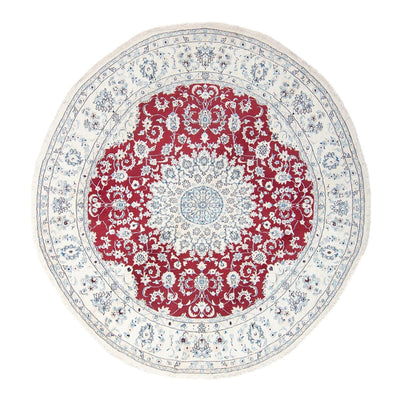
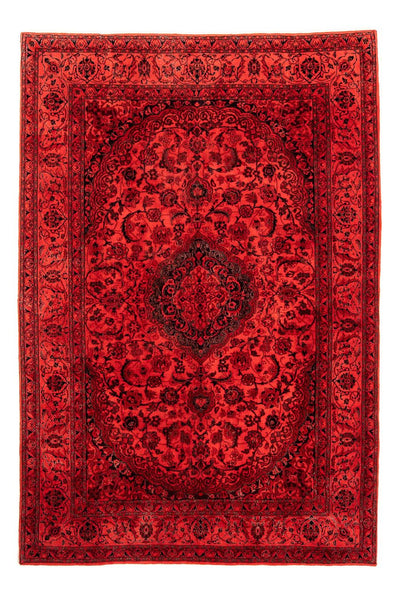


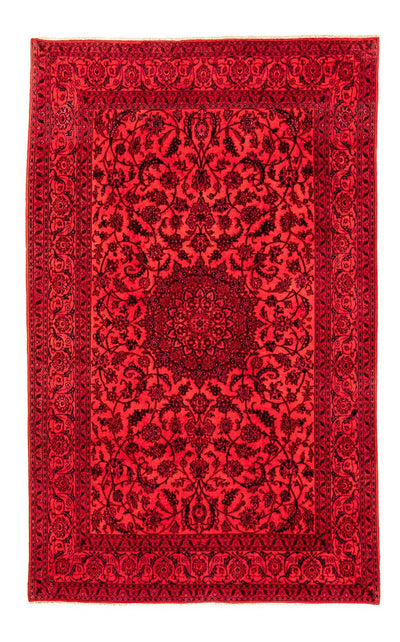


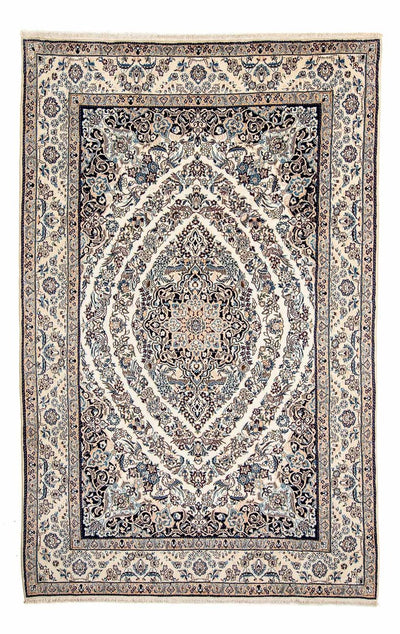


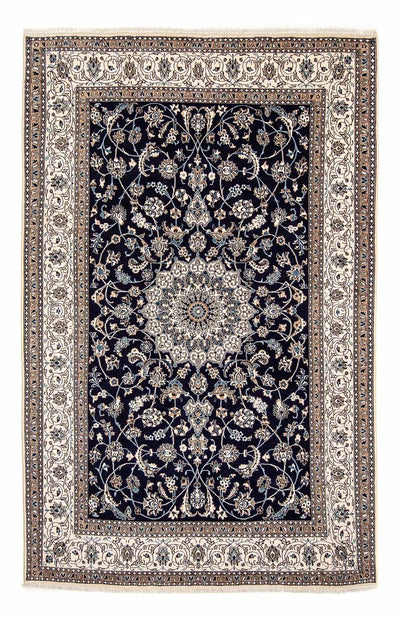
Nain rugs are among the finest Persian rugs in the world and combine exceptional knotting artistry with timeless elegance. Every hand-knotted one-off from the Iranian oasis town of Nain impresses with the highest quality, fine materials and characteristic patterns that give every room a special aura.
The history of rug production in Nain only began in the 1930s, when the traditional textile industry of the town on the edge of the Dasht-e Kavir desert declined. The weavers of the desert town transferred their textile skills to rug knotting and created exceptionally fine qualities that quickly gained international recognition. Unlike other centres of Persian knotting in Iran, Nain therefore started comparatively late, but quickly reached the highest standards.
The centre of production is still the town of Nain itself, together with the surrounding workshops of renowned manufactories. The best-known names are Habibian, who is regarded as the pioneer of Nain knotting, as well as Kashmar and Tabas. Each workshop cultivates its own traditions in pattern design and colouring, while all of them unite the highest craftsmanship. These classics of Persian rug art have earned a firm place in the world of sophisticated interiors.
The character of a genuine Nain rug shows in its understated elegance. Compared with other oriental rugs, the designs appear particularly harmonious and subtle. The combination of traditional knotting with contemporary taste makes them the ideal choice for modern and classic interiors alike.
The basis of every piece is the finest new wool from selected breeds of sheep. This material guarantees durability and a pleasantly soft feel. Particularly characteristic is the artful incorporation of silk, which gives the rug its typical sheen and highlights important pattern elements. The combination of these high-quality materials creates a unique appearance.
Only warp threads of cotton – or, in particularly valuable pieces, of silk – are used for the knotting. The knots are tied as Persian Senneh knots, which allows particularly fine knot densities. A decisive quality feature is the number of knots per square metre, which varies greatly depending on the La number and determines the fineness of the piece.
The quality can be read clearly from the La classification. In Persian, La means "layer" and refers to the number of threads that together form a warp thread. The lower the La number, the higher the knot density and thus the quality. This system allows a transparent classification and makes choosing easier when buying.
A Nain 12la has around 200,000 to 300,000 knots per square metre and offers solid quality at an attractive price. The popular Nain 9la reaches around 400,000 knots and is a good compromise between price and fineness.
The Nain 6la, with 500,000 to 900,000 knots per square metre, is particularly sought after. This category combines excellent knotting with everyday practicality and is strongly represented in our range. At the top is the Nain 4la with over a million knots per square metre – a true masterpiece of the knotting art and a coveted collector's item for connoisseurs.
You can check the La number yourself: look at the fringes at the end of the rug. Three pairs of threads indicate a high-quality Nain 6la, two pairs an exclusive Nain 4la. This simple test method gives you confidence when buying.
Dyeing is still done predominantly with natural dyes from plants, minerals and insect pigments. The characteristic blue that defines many pieces comes from the indigo plant and gives the rugs their special depth. This traditional dyeing technique guarantees colourfastness for decades and lets the colours mature beautifully over the years.
The typical design shows a central medallion surrounded by finely worked floral ornaments. This classic composition is complemented by artistic corner pieces that frame the medallion harmoniously. The entire field is usually filled with tendril-like patterns that reveal the greatest attention to detail.
The colouring traditionally stays within light, harmonious tones. Cream and beige often form the base, while various shades of blue provide accents. Subtle reds or soft green can also be found in the patterns. The artful silk inlay highlights special details and makes the rug shimmer differently depending on the incidence of light.
In addition to the classic medallion patterns, there are also versions with all-over designs, in which the entire field is evenly patterned. Particularly fine are the so-called Nain Nain rugs, which are made according to the strictest quality criteria and often show particularly elaborate designs. The main colours usually remain restrained and elegant.
The floral motifs are not only decorative but often carry symbolic meaning. Palmettes stand for vitality, rosettes for perfection. The harmonious arrangement of these elements reflects the Persian understanding of beauty and order. Each one-off thus tells its own story from the world of Persian craftsmanship.
The range of formats extends from small accent rugs to generous room-sized rugs that define entire living areas. The right size depends on where the rug will be used and on the layout of the room.
The most common sizes are rectangular rugs in standard dimensions. Compact formats such as 100 x 150 cm are perfect as bedside rugs or for small seating areas. Medium sizes such as 150 x 200 cm or 170 x 240 cm are ideal for dining areas or under coffee tables.
Large formats such as 200 x 300 cm or larger set impressive accents in spacious living rooms. For particularly large rooms, formats up to 300 x 400 cm are also available, which can sit under entire seating landscapes. Choosing the right size has a considerable influence on the effect in the room.
Runners in narrow, elongated formats are perfect for hallways, entrance halls or next to the bed. These elegant pieces show off the fine patterns particularly well and give passageways an exclusive touch. Square or round formats are also available, but less often than rectangular versions.
Their timeless elegance and neutral colouring make these rugs the ideal choice for almost any living area. Their versatility allows them to be used anywhere from the prestigious entrance area to a private retreat.
In the living room, a Nain rug unfolds its full effect. As a central element under the seating area, it creates a noble atmosphere and visually defines the living area. The high knot density ensures pleasant comfort underfoot, while the subtle colouring has a calming effect. Larger formats in particular come into their own here and give the room a sense of spaciousness.
In the bedroom, the light tones and calming patterns create a relaxing environment. A piece next to the bed pampers your feet when you get up and at the same time gives the room a luxurious ambience. The natural materials regulate the indoor climate and contribute to healthy sleep.
Placed under the dining table, the rug protects the floor and dampens noise. The dense knotting makes it hard-wearing enough for this heavily used zone. Make sure the rug is large enough for the chairs to stand completely on it even when pulled out – this avoids trip edges and preserves the elegance.
A runner in the entrance area or hallway gives visitors a sense of quality and style as soon as they enter. Despite their exclusivity, these rugs are robust enough for busy areas thanks to their high knot density. The light colours often visually brighten dark hallways and create an inviting atmosphere.
With the right care, your rug will remain beautiful for generations and retain its value. Care is less time-consuming than is often assumed and follows a few basic rules that anyone can apply.
Vacuum your rug regularly in the direction of the pile at medium suction. Avoid rotating brushes, which could damage the fine fibres. The back should also be vacuumed occasionally to remove deep-seated dust. This simple measure preserves the freshness of the colours and prevents dirt from settling.
Turn the rug through 180 degrees every few months to avoid one-sided traffic marks. Especially in busy areas, this prevents uneven wear. Do not leave heavy furniture permanently in the same places – use furniture glides to protect the fibres and preserve the shape.
React immediately to stains: blot liquids with a lint-free, light-coloured cloth. Never rub, as this pushes the stain deeper into the material and damages the fibres. Use only clear, lukewarm water for the first treatment. For stubborn stains, consult a specialist before resorting to cleaning agents.
Have your rug professionally cleaned every three to five years. Specialist rug cleaners have the necessary experience with high-quality hand-knotted rugs and also treat the delicate silk gently. This investment preserves the value of your one-off and makes the colours shine again.
Buying a rug is an investment that should be carefully considered. Various quality criteria help you find the right piece and distinguish value from mere price.
A genuine Nain rug is always hand-knotted. You can tell this from the back: the pattern must be clearly recognisable, but with slight irregularities that reveal genuine handwork. Machine-made imitations show a pattern that is too perfect and uniform. The fringes are also an indicator – they must grow directly out of the rug, not be sewn on.
The La number should be verifiable. Count the pairs of threads in the fringes and compare the stated knot density with the actual appearance. With reputable dealers, look for certificates or proof of origin that confirm authenticity.
Check the evenness of the knots and the precision of the pattern. A high-quality piece shows clean lines even with complex designs. The colour transitions should be harmonious, without harsh breaks. Pay attention to the silk content – the more silk has been used, the more valuable the piece usually is.
The back provides information about the knot density. On high-quality rugs, the individual knots can hardly be distinguished with the naked eye. The material should feel high-quality – soft but firm and dense. A slight sheen is normal and desirable, especially in rugs with silk content.
The price depends on several factors: La number, size, silk content and age. A Nain 4la costs considerably more than a comparable Nain 9la, as production is more complex. Pure silk rugs reach the highest prices. Age also plays a role – older pieces in good condition are often more valuable than new productions.
Do not be tempted by extremely low prices. A genuine, hand-knotted rug of good quality has its price, which reflects the months or years of handwork. Compared with machine-made rugs, however, it is an investment that brings joy for decades and retains or even increases its value. Occasional discount promotions from reputable dealers can offer attractive opportunities.
In the rug trade since 1977 and in Hamburg since 2007, we are your address for high-quality oriental rugs – in Hamburg and beyond. Our decades of experience in trading Persian rugs guarantee you expertise and reliable quality with every purchase. Trust in our expertise in this special category.
Every rug in our range is personally selected and checked. We only work with renowned manufactories and can trace the origin of every piece. This allows us to guarantee you authentic handwork instead of cheap imitations. Every piece is a genuine one-off with its own character.
We attach great importance to complete information on every rug. The La classification, knot density, material composition and origin are clearly stated. This transparency enables you to make a well-founded purchasing decision and creates confidence in your investment.
Our team knows the special features of these rugs and will be happy to advise you on choosing the right piece. Whether La quality, size, colouring or area of use – we help you find the rug that perfectly suits your requirements and your home. In our Hamburg showroom you can experience the rugs and feel the quality for yourself.
As an established family business, we calculate our prices fairly and transparently. You benefit from our direct access to manufacturers without unnecessary intermediaries. Shipping is fast and secure – your valuable one-off reaches you in perfect condition. Delivery is reliable and professionally organised.
Our relationship does not end with your purchase. We remain available afterwards for questions about care, cleaning or, if necessary, repairs. Our expertise helps you to preserve your rug in the best possible way and enjoy it for a long time.
Genuine pieces are hand-knotted, which shows on the back – the pattern is recognisable, but with slight irregularities. The fringes grow directly out of the rug and are not sewn on. You can check the La number by the pairs of threads in the fringes. Also characteristic are the fine knotting, the silk inlay with its typical sheen and the harmonious colouring in light tones with accents.
La means "layer" in Persian and refers to the number of threads that together form a warp thread. The lower the La number, the finer and more valuable the rug. A Nain 12la has around 200,000 knots per square metre, a Nain 6la 500,000 to 900,000 knots and a Nain 4la over a million knots. The La number is the most important quality feature and has a major influence on the price.
Vacuum regularly in the direction of the pile at medium power without a rotating brush. Turn the rug every few months to avoid one-sided wear. Blot stains immediately, never rub, and use only lukewarm water at first. Have the rug professionally cleaned every three to five years. Avoid direct sunlight over long periods.
Despite their exclusivity, they are perfectly suitable for everyday use. The high knot density makes them hard-wearing and durable. They are also suitable for busy areas such as living rooms or dining rooms. However, particularly valuable pieces in Nain 4la quality or pure silk rugs are better placed in less heavily used areas. The combination of robustness and beauty makes them ideal rugs for living spaces.
That depends on your budget and intended use. For normal living areas with regular use, a Nain 6la is an excellent choice – it offers outstanding quality at a still moderate price. Nain 9la or 12la are good entry-level qualities. Collectors prefer Nain 4la quality, which represents the highest knotting artistry. When choosing, also consider the room and the expected wear.
The price varies considerably depending on quality, size and age. A smaller Nain 9la starts at around 1,000 to 2,000 euros, while a large Nain 6la can cost several thousand euros. Nain 4la rugs or pieces made of pure silk often reach five-figure sums. These prices reflect months or years of handwork. Consider the purchase an investment – high-quality pieces hold their value and can increase in value.
Absolutely. The subtle colouring and clear pattern harmonise perfectly with modern design. The light tones of cream, beige and blue blend seamlessly into minimalist interior concepts. The contrast between traditional craftsmanship and contemporary furniture creates exciting accents. Especially in modern rooms, these classics set counterpoints that add warmth and character.
Tradition, expertise & verified quality
Shop without risk
Simple & convenient home delivery
The right rug for every style

$38.00