










Since 1977: Your rug specialist
Tradition, expertise & verified quality
Afghan rugs combine centuries-old craftsmanship with distinctive patterns and warm colours. Hand-knotted Oriental rugs from Afghanistan, since 1977 (in Hamburg since 2007).
… Products

Afghan rugs combine centuries-old craftsmanship with distinctive patterns and warm colours. These hand-knotted oriental rugs from Afghanistan impress with their quality, durability and unmistakable character. At Morgenland, you have been able to find a carefully curated collection of authentic pieces from every region of the country since 1977 (in Hamburg since 2007).
The history of rug knotting in Afghanistan goes back more than a thousand years. In regions such as Herat, Kabul and the northern provinces, centres of rug knotting emerged that are still part of the country's cultural identity today. Every hand-knotted piece bears the signature of its knotters and tells of the tradition of an entire country.
An Afghan rug embodies the authentic charm of the Orient. The knotters work according to traditional rug-knotting techniques handed down from generation to generation. This handwork makes every rug a one-of-a-kind piece with its own flair.
Different regions have developed their own knotting traditions. Particularly well known are Khal Mohammadi rugs from the north with their characteristic red colouring. Akhche and Ariana are also among the valued Afghan variants, each with its own individual features.
Geographical origin has a considerable influence on patterns and choice of colours. Rugs from the area around Herat often show finer knotting, while Turkmen pieces have bolder designs. These regional differences shape the appearance and character of every single piece.
In Afghanistan, rug knotting is more than just a craft. It is part of the cultural heritage and is preserved in many families as a valuable tradition. The patterns and symbols often carry stories of tribal affiliation and local customs.
High-quality wool forms the basis of most pieces. Afghan sheep provide particularly robust, lustrous fibres that are ideal for processing. These natural materials guarantee durability and a pleasant feel.
The wool is traditionally hand-spun and dyed with natural dyes. Red often dominates the colour palette, complemented by warm shades of brown, beige and black. These natural pigments give the rugs their characteristic depth and elegance.
Depending on the region and quality level, knot density varies between 80,000 and 250,000 knots per square metre. Finer pieces from urban workshops reach higher values, while tribal rugs often have coarser but extremely hard-wearing knotting.
The pile is usually sheared to 8 to 15 millimetres. This height provides a pleasant feel and good durability in everyday use. The warp threads are often made of cotton, while high-quality pieces are made entirely of wool.
Besides wool, silk is also used in particularly fine pieces. These rugs show the finest details and a unique sheen. Silk elements often accentuate patterns and give the rug additional elegance and refinement.
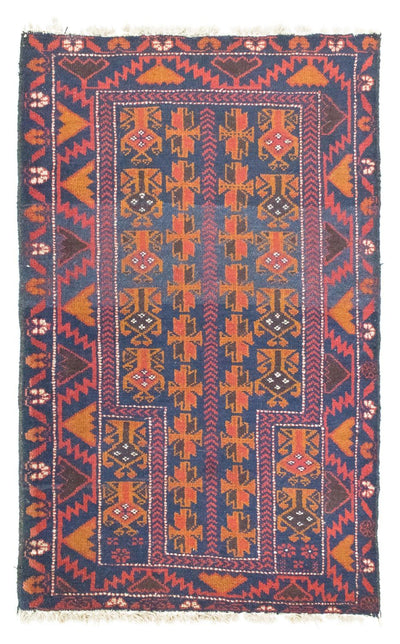
The most famous pattern is the elephant's foot, also known as the gul. These geometric shapes repeat rhythmically across the entire field and create a powerful look. Each tribe interprets this motif in its own way, with individual variations.
Typical designs feature strictly geometric compositions. Medallions, borders and repeating motifs dominate the appearance. This clear structure distinguishes Afghan rugs from Persian variants with their often floral motifs.
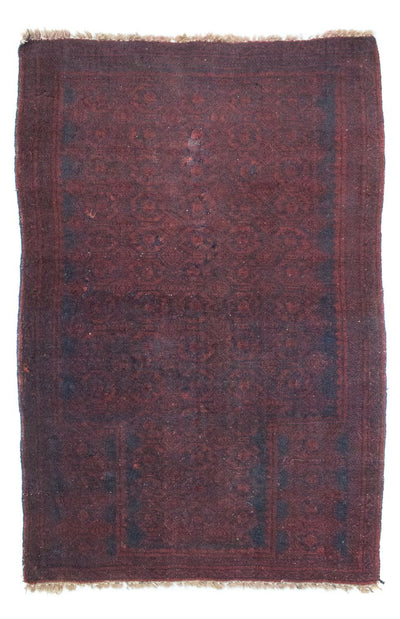
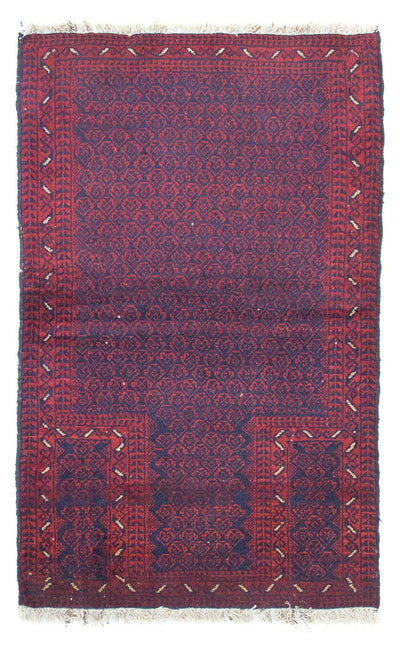
Shades of red in every nuance define the look. The palette ranges from dark wine red to bright brick red. These red colours symbolise vitality and are contrasted by darker accents in blue or black.
The colouring follows traditional ideas and regional preferences. While some tribes prefer strong contrasts, others favour harmonious transitions between shades. Natural dyes produce vivid but not garish nuances.
Many Afghan rugs bear the classic Bukhara pattern. These designs with their characteristic guls originated in Central Asia. Afghan knotters interpreted these patterns and created their own variants with a local character.
Bukhara designs are characterised by their clear geometry. Usually three to four rows of guls are arranged symmetrically, framed by several borders. This strict order gives the rugs their unmistakable look.
The motifs often carry symbolic meanings. Geometric shapes represent cosmic order, tribal affiliation or protection. Even though the practical function comes first today, these traditional meanings remain an important part of cultural identity.
Afghan rugs are produced in all common sizes. The range extends from small formats from 40 x 60 cm up to generous dimensions of 300 x 400 cm. The choice depends on your room and the effect you want.
Classic formats such as 150 x 200 cm or 200 x 300 cm are ideal for living spaces. These sizes create a harmonious balance between furniture and floor space and visually define living areas.
Long, narrow runners are particularly popular for hallways and corridors. Afghan runners often show continuous patterns that emphasise the length of the room. Typical sizes are 80 x 300 cm or longer.
Besides rectangular formats, square pieces are also made. These are perfect for central placement in rooms with symmetrical furnishings. Most Afghan rugs, however, follow the classic rectangular shape.
Afghan rugs come into their own in the living room. The warm colours create cosiness and form an exciting contrast to modern furniture. A large rug under the seating area visually defines the space and gives the room oriental charm.
These rugs also create a cosy atmosphere in the bedroom. The natural wool regulates the indoor climate and feels pleasant underfoot. Choose a size that extends from under the sides of the bed and serves as the first place to stand in the morning.
In the dining room, the rug should be large enough for all chair legs to stay on the rug even when the chairs are pushed back. This prevents damage to the edges. Thanks to their durability, Afghan rugs withstand the wear caused by chairs well.
The entrance area benefits from the robustness of Afghan knotting. A runner in the hallway welcomes guests with oriental flair and is at the same time hard-wearing enough for daily foot traffic. The dense knots reliably resist abrasion and dirt.
Regular vacuuming on a low setting effectively removes dust and dirt. Always vacuum in the direction of the pile to protect the fibres. Once a week is enough with normal use, a little more often in heavily used areas.
Turn the rug 180 degrees every six to twelve months. This ensures even wear and prevents one-sided colour changes caused by sunlight. Avoid direct, constant sunlight on the same spot of the rug.
Dab fresh stains immediately with an absorbent cloth without rubbing. Use lukewarm water and, if necessary, pH-neutral soap. Aggressive cleaning agents damage the natural fibres and can cause colours to fade.
For stubborn dirt, professional rug cleaning is recommended. Specialist companies know the particular features of hand-knotted wool rugs and use gentle methods. Professional cleaning every three to five years preserves the beauty and quality for the long term.
If you store the rug for a longer period, roll it up and wrap it in breathable fabric. Never fold it, as this leaves creases. Store it in a dry, well-ventilated place away from direct sunlight.
Use a non-slip underlay to keep the rug in place on the floor. This not only prevents slipping, but also prevents premature wear on the underside caused by friction with the floor covering.
Knot density tells you about quality and durability. Turn the rug over and look at the back. On high-quality pieces, the pattern appears almost as clearly on the back as on the front. The finer the knots, the more detailed the pattern.
Check that the knotting is even. Hand-knotted rugs show small irregularities that underline their authenticity. Machine-made goods, by contrast, look perfectly uniform and show no individual features or natural variations.
You can recognise real wool by its smell: carefully burn a single fibre. Wool smells of burnt hair and leaves crumbly ash. Synthetic fibres melt and smell of plastic. This test immediately shows the authenticity and quality of the material.
Look for natural colour gradations. Hand-dyed wool shows slight nuances within one colour, known as abrash. These variations are a mark of quality and give the rug liveliness. Chemical dyes often look too uniform.
The price depends on size, knot density, age and condition. New hand-knotted pieces start at around 200 euros for small formats. Larger rugs with fine knotting cost several thousand euros. Antique pieces fetch even higher prices on the market.
A low price often indicates machine production or synthetic materials. It is better to invest in a smaller, high-quality piece than in a large rug of inferior quality. Authentic handwork retains its value for decades.
Since 1977, Morgenland has been advising customers on high-quality oriental rugs. Our expertise covers all types of Afghan knotting, from classic tribal rugs to fine urban productions. Every piece in our collection has been carefully selected and inspected.
In our Hamburg showroom, you can experience the rugs in person. The tactile quality, the intensity of the colours and the details of the patterns are best appreciated up close. Our specialist advisers will answer all your questions about origin, care and the right sizes for your home.
We take time for your individual wishes. Whether you are looking for a rug for a particular room or want to learn more about the history of Afghan rug knotting, you will find knowledgeable contacts with us. We greatly value being close to our customers in Hamburg and the surrounding area.
Our range covers different price ranges and styles. From classic red Mauri rugs to rarer variants in other colours, we offer a wide selection. Visit us and find your own personal one-of-a-kind piece for your home.
Genuine Afghan rugs have a hand-knotted structure with slight irregularities. The back shows the pattern clearly. Natural wool and characteristic colours combined with the elephant's foot pattern are typical identifying features. A burn test of the fibres gives additional certainty about the materials used.
The elephant's foot, also known as the gul, is the best-known Afghan rug pattern. Depending on interpretation, the geometric shapes symbolise tribal affiliation or cosmic order. Each tribe has developed its own variant of this motif, rich in tradition, and passed it down through the generations.
Vacuum the rug weekly on a low setting in the direction of the pile. Protect it from direct sunlight and turn it regularly. Dab stains immediately, do not rub. Professional cleaning by specialist companies with experience in handling hand-knotted wool rugs is recommended every three to five years.
For living rooms, sizes from 150 x 200 cm are suitable. The rug should lie under the front legs of the seating furniture. In larger rooms, sizes of 200 x 300 cm or more create a generous effect. Measure your room beforehand and allow at least 30 cm of space to the walls.
Small hand-knotted rugs start at around 200 to 400 euros, depending on workmanship. Medium formats of around 150 x 200 cm cost between 600 and 1,500 euros. Large, finely knotted pieces reach 2,000 to 5,000 euros or more. The price depends on size, knot density and condition.
Yes, hand-knotted wool rugs work on underfloor heating. Wool is a natural insulator and tolerates moderate heat well. Make sure not to set the heating to maximum temperature. An underlay improves heat circulation and additionally protects the rug from excessive heat.
At Morgenland, you have been able to find a curated selection of authentic Afghan rugs since 1977 (in Hamburg since 2007). Our showroom offers personal advice and the opportunity to compare different pieces. We answer all your questions about origin, quality and care and help you find the right rug for your home.
Tradition, expertise & verified quality
Shop without risk
Simple & convenient home delivery
The right rug for every style

$38.00